 Marrakech Guidebook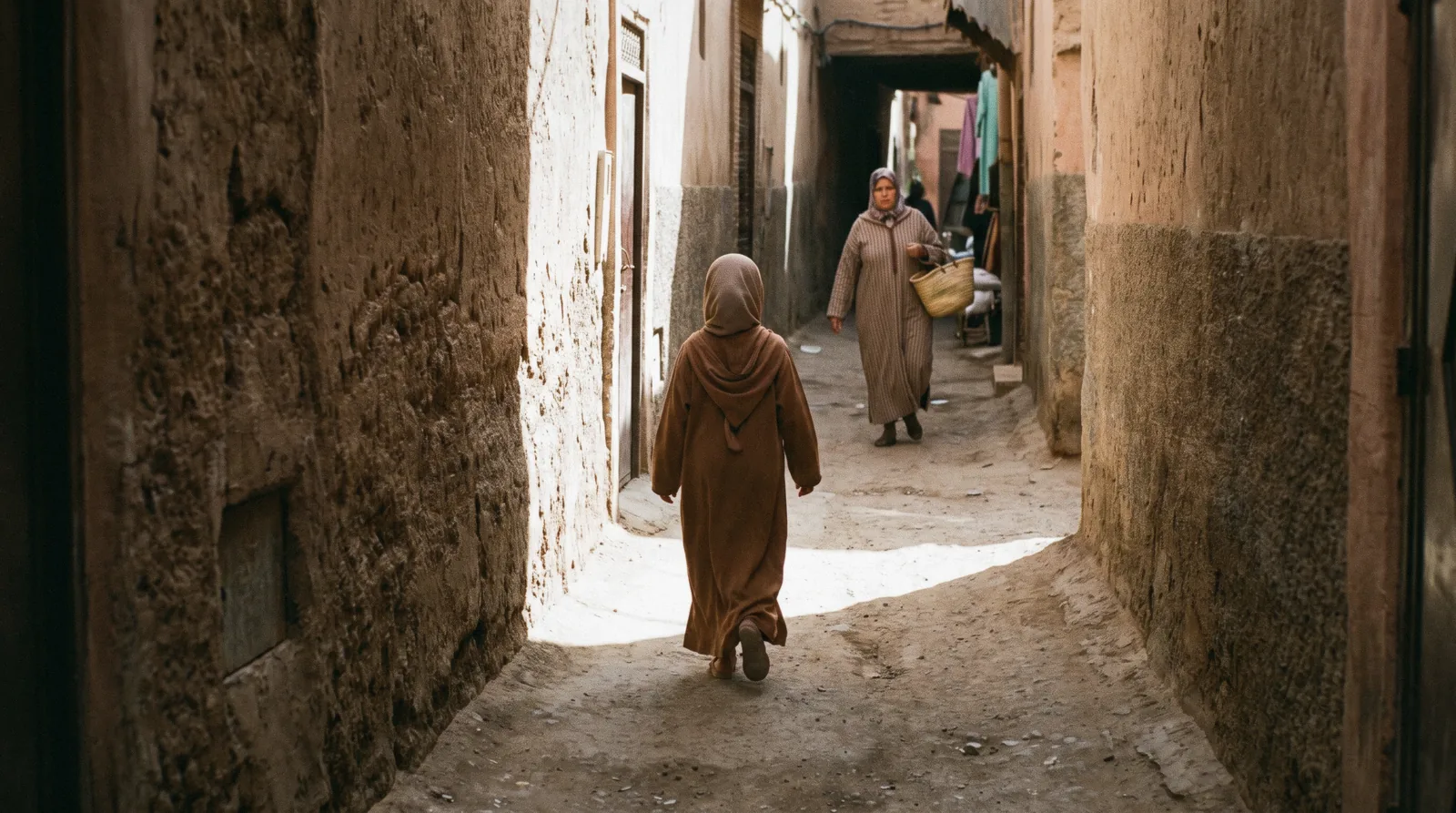
What to Wear in Marrakech
What to wear in Marrakech is a question about law, weather and custom in that order, and only one of the three has an official answer. There is no Moroccan dress code for visitors: the national tourist office publishes climate, currency, formalities and health advice and not a word about clothing. The only clothing guidance from any authority is a single British sentence recommending loose-fitting clothes covering the arms, legs and chest, given in the context of unwanted attention, and a French line about dress respectful of local usage. Everything else you have read on the subject is custom, comfort or somebody's photographs. This page separates the three, adds the rules that genuinely are law, on alcohol, on photography and on mosques, and prices the one exception. Checked in Q3 2026; the wider trip sits in the Marrakech guide as a whole.
Quick answer One official sentence, one heat rule, three real laws
Cover shoulders and knees in the medina and you will not think about clothing again for the rest of the trip. That is custom rather than law: no Moroccan authority publishes a dress code for visitors at all, and the only official guidance in existence is one British sentence recommending loose clothing that covers the arms, legs and chest. The heat is the stricter master. July averages a daily high of 36.6°C, so linen and cotton beat modesty rules as a packing principle.
Key takeaways
- Nothing you wear breaks a law in Marrakech. What does break one is drinking alcohol outside a licensed restaurant or bar, and the alcohol rules tighten further during Ramadan.
- Shoes decide more of your day than anything else you pack. The medina lanes are uneven, wet in places near the dyers and hot underfoot, and the souks are walked rather than driven.
- You cannot enter a working mosque in Morocco as a non-Muslim, whatever you wear. The Ben Youssef Madrasa is a former Quranic school rather than a mosque, which is why it is ticketed and open.
- Photographing people needs their consent, in the British advisory's words and in Moroccan data-protection law. Agree it before the shutter, and a guided souk walk makes those exchanges somebody else's job.
What Is Required, What Is Customary, Place by Place
The distinction that makes this manageable: almost nothing about clothing in Marrakech is a rule, and the few real rules are not about clothes. Compiled from the advisories quoted below and each venue's own published conditions, read in Q3 2026.
| Where | Actually required | Customary, and worth doing | Why |
|---|---|---|---|
| Medina lanes and the souks | Nothing | Shoulders and knees covered, closed shoes | A lived-in working quarter, and the surfaces are uneven |
| Jemaa el-Fna after dark | Nothing | The same, plus a layer: January nights average 3.8°C | The square is at its busiest at night and the plain cools fast |
| Ministry monuments and museums | No published dress condition at any of them | Whatever you walked there in | They are museums, not religious buildings |
| Working mosques | Entry is closed to non-Muslims | Not applicable | Stated by France Diplomatie; no Moroccan source publishes it |
| Riad roof terraces and pools | The property's own house rules | Swimwear at the pool, cover to cross the courtyard | A riad is somebody's house in a residential lane |
| Gueliz restaurants and bars | Nothing; this is the modern city | City clothes, and something warm after sunset | Gueliz reads as a European quarter |
| An Atlas or Ourika day | Nothing | Real shoes, a layer, and long trousers | The valleys sit far higher and colder than the city |
Only two dress-adjacent conditions were found published by any Marrakech venue at all: Le Jardin Secret bars children under six from its tower, and the Jardin Majorelle boutique states that pushchairs are not allowed inside the shop. Neither is about clothing, which tells you how little is written down.
The Only Dress Guidance Any Authority Publishes
Three foreign ministries and one Moroccan tourist authority. Between them they produce two sentences on clothing, and the silence of the fourth is the finding worth carrying.
The British Foreign Office publishes this, and it is the single most quoted sentence in every Marrakech packing guide, usually without its context: "Women may receive unwanted attention in Morocco, especially when travelling alone. Consider wearing loose-fitting clothing which cover the arms, legs and chest." It appears under safety rather than under customs, and it is a recommendation about attention rather than about propriety. The same page publishes no separate guidance for men at all.
Canada is briefer: "Dress conservatively, behave discreetly and respect religious and social traditions." France recommends decent and discreet behaviour and dress respectful of local usage, and adds one specific line, that a one-piece swimsuit is preferable at the beach, which is a coastal note rather than a Marrakech one.
What that means in practice
Custom in Marrakech is set by the street rather than by a ministry, and the street is not uniform. In the medina most Moroccan women you pass are covered to the wrist and ankle and many wear a headscarf; in Gueliz at lunchtime you will see the same range of clothing as in any Mediterranean city. Visitors in shorts and vests are a normal sight in both, and nothing happens to them.
So the honest advice is comfort-led rather than fear-led. Covered shoulders and knees in loose fabric attract the least attention, are cooler than bare skin under a 36.6°C sun, and remove any question at a riad door or in a residential lane. A headscarf is not needed anywhere you are permitted to go, since the buildings that would require one are the buildings you cannot enter.
Quotations from the UK Foreign Office, Global Affairs Canada and France Diplomatie's Morocco pages; the negative finding from the ONMT's own useful-information and must-know pages. All read in Q3 2026.
The Thermometer Decides More Than the Custom Does
Thirty-year means from the Open-Meteo ERA5 archive for the city, translated into what actually goes in the bag. The full monthly series, with rainfall, sits on when to visit.
Marrakech sits on a plain at the foot of a 4,000 m range, and the consequence is a daily temperature swing that surprises people who packed for a hot country. In January the mean daily high is 18.1°C and the mean night 3.8°C; in July the high is 36.6°C and the night 19.0°C. The clothing consequence is layers in winter and long loose sleeves in summer, which is the opposite of what most visitors bring.
| Season | Mean daily high | What the day needs | What the evening needs |
|---|---|---|---|
| December to February | 18.1°C to 19.9°C | Long sleeves, trousers, a jacket in the shade | A real coat; nights average 3.8°C to 5.2°C |
| March to May | 22.7°C to 28.5°C | Shirt and trousers, sun hat from April | A light layer after sunset |
| June to August | 32.5°C to 36.6°C | Loose linen and cotton, covered arms, a hat | Still warm: nights average 16.2°C to 19.4°C |
| September to November | 22.4°C to 31.4°C | As spring, cooling through the season | A layer from October, a jacket by November |
Summer is a clothing problem, not a modesty problem
Between June and September the medina is walked before ten and after five, and the middle of the day is spent inside a museum, a garden or a courtyard. The clothing that works in that pattern is loose, pale and long: covered arms are cooler than bare ones under direct sun, and the same garment answers the custom question without your having to think about it. Sandals fail on the second day, because the lanes are uneven and the dyers' streets are wet.
Winter catches more people out than summer does. Riads are built to shed heat, with high ceilings, tiled floors and open courtyards, and many have no heating worth the name. A January evening on a roof terrace at 5°C is genuinely cold, and the answer is the jumper you did not pack rather than the hotel's blanket.
The two things everybody underpacks
Shoes and a scarf. Closed shoes with a real sole handle the medina's cobbles, the wet patches by the tanneries and the 3 hours a day of walking a normal Marrakech itinerary involves; the shoes go on to work at Ourika and in the Atlas, where the ground is worse and the temperature lower. A large light scarf does four jobs: sun on the neck, dust in the souks, a layer at night and cover if you want it.
One more, from the practical rather than the sartorial end. Whatever you carry it in should close and sit across the body on the wall side of the lane, because the theft the advisories describe for Marrakech is a passing motorbike taking a bag or a phone, which the safety page covers in the ministries' own words.
Temperature means computed from the Open-Meteo ERA5 reanalysis for 31.63 N, 7.98 W across the 30 complete years to 2024, the same series used on when to visit; read in Q3 2026.
Men, and the Guidance Nobody Writes for Them
Every authority's clothing sentence is addressed to women, and every packing guide follows suit. Here is the men's version, which is short because the constraints are.
No advisory publishes anything about what men should wear in Morocco. What exists is the same general recommendation to behave decently and discreetly and to respect local usage, addressed to visitors as a whole. In the street, Moroccan men in Marrakech wear trousers overwhelmingly; shorts read as beach clothing rather than city clothing, as they do in southern Europe, and long shorts pass without comment.
The practical case for trousers is the sun and the sitting: long light trousers are cooler on a 36.6°C afternoon than bare legs, and more comfortable on a riad terrace cushion or in a grand taxi. A collared shirt is worth one place in the bag for a Gueliz dinner and for nothing else.
Two mixed-company situations worth knowing
A neighbourhood hammam is single-sex by hours or by building and involves a level of undress that the venue's own house rules set, and no Moroccan authority publishes an etiquette code for it at all. What is officially described is only the ritual itself: steam, exfoliation with the kessa glove, black soap and ghassoul clay. Ask the hammam what to bring and what to wear, since it is the only body that can answer. The hammams page compares the public and spa versions.
The other is the swimming pool. Riad and hotel pools are private space and swimwear is normal at them; the courtyard between the pool and your room is semi-public, shared with other guests and staff, and a cover crossing it is ordinary courtesy rather than a rule.
Ramadan: What Changes, and What the Law Actually Says
The month most likely to be misdescribed to you. The next one begins in February 2027, on a date fixed by observation of the crescent rather than in advance, and Canada gives on or around 7 February as its estimate.
Start with the law, because the internet gets it backwards. Penal Code article 222 punishes a person "notoriously known to belong to the Muslim religion" who conspicuously breaks the fast in a public place during Ramadan. It is drafted around that status, so it does not reach a non-Muslim foreign visitor, and no official source states that a tourist can be prosecuted under it. The advisories treat daytime eating as a matter of offence rather than of law: the British wording is that "eating or drinking, swearing, smoking or chewing gum in public in the daytime may cause offence".
Alcohol is where a real restriction bites. France Diplomatie states that during Ramadan it is not possible to buy alcohol, still less to drink it in public. Outside Ramadan the licensing instrument is an order of 17 July 1967, whose article 28 forbids a licensed seller from serving alcohol to Moroccan Muslims. There is no article 906 governing alcohol in Moroccan law, despite its appearing on numerous travel pages; it does not exist.
What a Ramadan visit is actually like
Shop and restaurant hours move, driving gets more erratic towards sunset as everyone hurries home for the iftar, and the British advice notes that clothing not meeting local dress codes may cause more offence during the month. The monuments keep their own hours, and two venues publish shortened Ramadan opening, which is the practical planning point.
The clothing consequence is small and easy: cover a little more than you otherwise would, eat and drink indoors during daylight hours rather than in the street, and do not smoke while walking through the medina. None of that is a legal requirement on you. All of it is the difference between being a guest and being a nuisance, in a month when the person serving you has not eaten since dawn.
Penal Code article 222 from the consolidated code published by the Tresorerie Generale du Royaume; Ramadan conduct and the February 2027 timing from the UK Foreign Office, the estimated day from Global Affairs Canada, and the alcohol line from France Diplomatie. Read in Q3 2026.
Alcohol: Legal, Licensed, and Not in the Street
The one conduct rule on this page that an authority states as law rather than as advice, and the one most often broken by accident on a riad roof or in a park.
The British advisory is unambiguous: "drinking alcohol in the street and anywhere other than a licensed restaurant or bar is illegal and can lead to arrest". That is the whole rule, and it is about place rather than quantity. A licensed restaurant, a hotel bar, a riad with a licence and your own room are inside it; a bench on a boulevard, a park, the square and a rooftop shared with the street are not.
Two further points follow from the licensing regime. The 1967 order's article 28 forbids selling alcohol to Moroccan Muslims, which is why a licensed shop may ask a Moroccan customer for identification and why alcohol is sold in a discreet corner of a supermarket rather than on an open shelf. And the British page carries a methanol warning for Morocco, that deaths and serious illness have been caused by drinks containing methanol and that it cannot be detected by taste or smell, which is an argument for licensed premises rather than for whatever is offered informally.
Alcohol wording from the UK Foreign Office; the licensing order of 17 July 1967 and its article 28 recorded in the research bundle, the primary text server having refused connection in Q3 2026.
Photographs: Consent Is the Rule, Twice Over
A dress-and-conduct page has to cover the camera, because in Marrakech the two questions arrive together, in the square, in the souks and on a rooftop above the tanneries.
The advisory rule is plain: always ask permission before taking pictures of people, especially children. The legal rule points the same way from a different direction. Under Moroccan data-protection law a person's image is personal data, and processing it requires the consent of the person concerned; the authority that enforces it can impose fines of 10,000 to 200,000 dirhams.
Nobody has established that this reaches a tourist photographing a stranger in the street, and this page does not claim it does, but consent is the rule under both readings, so the practical answer is identical.
- Ask before the shutter, and expect a performer, a henna artist or an animal handler on Jemaa el-Fna to want paying. No official tariff exists for that, so agree the number first, out loud.
- Photographing near sensitive political or military sites is illegal, in the British advisory's own words, and Canada adds a flat instruction not to photograph military or security installations.
- Drones need prior permission from the Directorate General for Civil Aviation, and Canada states they will be confiscated on entry. Do not put one in the bag.
- Inside the ticketed monuments the venue's own conditions apply. None of the Marrakech monuments publishes a photography ban we could find, and none publishes a permission either.
The one that catches people out
The tanneries. There is no ticket, no published opening time and no official guide fee for them, so every arrangement at the door is private, and the sprig of mint handed to you at the top of a terrace is the opening of a negotiation rather than a courtesy. Agree what the visit costs and what a photograph costs before you climb the stairs, and read the tanneries page first, because the same absence of a tariff is why the accounts of that visit vary so wildly.
Photography wording from the UK Foreign Office and Global Affairs Canada; the personal-data reading from loi 09-08 articles 1 and 4 as published by the CNDP, which enforces it. Read in Q3 2026.
Mosques, Madrasas and the One Door That Opens
The most misunderstood line in every Marrakech packing guide is the advice on what to wear into a mosque, because in Morocco the question does not arise for a non-Muslim visitor.
The clearest statement comes from France Diplomatie: it is formally forbidden for non-Muslims to enter Muslim places of worship, and only the great tourist sites may be visited. No Moroccan first-party source publishes the rule and the British advisory does not state it either, so the French ministry is the authority this site cites for it.
The consequences in Marrakech are specific. The Koutoubia is a working mosque, so its interior is closed to you and its gardens and esplanade are open and free. The Ben Youssef Madrasa is a former Quranic school rather than a mosque, which is exactly why it is ticketed, restored and open at $5.33 (50 MAD). The distinction is the whole answer to why one costs nothing and cannot be entered while the other charges and can.
| Building | Can a non-Muslim enter? | Price | What to wear |
|---|---|---|---|
| Koutoubia Mosque | No, interior closed | Free, gardens and exterior | Anything; you are outdoors |
| Ben Youssef Madrasa | Yes, it is a museum building | $5.33 (50 MAD) | No published dress condition |
| Almoravid Koubba | Yes, a ticketed monument | $10.65 (100 MAD) | No published dress condition |
| Hassan II Mosque, Casablanca | Yes, on a guided visit, the confirmed exception | $14.91 (140 dhs) foreign adult | Shoes removed, modest cover expected |
The exception, and why it is worth the detour
The Hassan II Mosque in Casablanca is the one great mosque in Morocco whose foundation admits non-Muslim visitors, on guided tours, at published times and published prices: 140 dirhams for a foreign adult, 70 for Moroccan residents and foreign students, 30 for Moroccan students and children over 4, free under 4. Visits run hourly through the morning and twice in the afternoon, with a shorter Friday list.
It is a three-hour train ride from Marrakech and outside what this guide covers, but it answers the question people arrive with. If seeing the inside of a Moroccan mosque matters to you, that is where it happens, and nowhere in Marrakech is a substitute for it.
The general rule quoted from France Diplomatie's Morocco customs page; the Hassan II tariffs and visit times from the Fondation de la Mosquee Hassan II's own site. The Ben Youssef and Koubba prices are from the ticketing bodies named on the tickets page. Read in Q3 2026.
The Packing List, With the Reason Attached
Everything above, reduced to what goes in the bag. Nothing here is a rule; each line is either the weather, the walking surface or the custom, and it says which.
Pack for 3 hours a day on foot on uneven ground, a 15-degree swing between afternoon and night, and lanes where you are a guest in somebody's residential street. That is the whole brief.
- Closed shoes with a real sole, worn in. The surface, not the custom, decides this one.
- Loose long trousers or a long skirt in cotton or linen, which is cooler in direct sun than bare legs and settles the custom question at the same time.
- Long light sleeves for the same two reasons, plus one short-sleeved layer for the terrace.
- A large light scarf: sun, dust, a night layer, and cover whenever you want it.
- A jumper or jacket from October to April. Riads have high ceilings, tiled floors and open courtyards, and January nights average 3.8°C.
- Swimwear for the riad pool, and something to cross the courtyard in.
- A hat and sunglasses from April to October, when the mean daily high runs from 24.7°C to 36.6°C.
- A cross-body bag that closes, worn on the wall side of the lane.
- Cash in small notes, because the medina does not take cards and nobody has change for a large one.
What to leave at home
The drone, which Canada says will be confiscated on entry. Anything you would be upset to have taken in a crowd, since visible jewellery is named in the advisories as what the motorbike thefts target. And the assumption that you need to dress differently from how you would in any hot Mediterranean city with a religious old town, because you do not.
One genuine surprise for shoppers: you will almost certainly buy clothing here. The souks sell babouches, kaftans, linen and wool at prices set by negotiation rather than by a label, which is a shopping problem rather than a packing one, and it is a good argument for leaving room in the bag.
Dress and Conduct: The Dos and Don'ts
Everything on this page compressed into decisions you can act on the morning you arrive. Each one is argued above, and none of the do column is a legal requirement.
Do
- Cover shoulders and knees in loose fabric in the medina. It draws less attention and is cooler than bare skin under a 36.6°C sun.
- Wear closed shoes with a real sole. The lanes are uneven and wet in places near the dyers.
- Pack a jumper from October to April. Riads have open courtyards and January nights average 3.8°C.
- Ask before photographing anyone, and agree the fee out loud if one is expected.
- Drink only in a licensed bar, restaurant or your own room, which is what the law actually requires.
Don't
- Do not pack a headscarf expecting to need one. No building you may enter asks for it.
- Do not plan on entering a working mosque: non-Muslims may not, whatever they wear.
- Do not eat, drink or smoke in the street in daylight during Ramadan, which the advisories say may cause offence.
- Do not bring a drone. Canada states they are confiscated on entry.
- Do not carry a bag on the street-side shoulder, since the theft the advisories name is a passing motorbike.
Nothing in the left column is a Moroccan legal requirement about clothing, because no such requirement exists. The alcohol, photography and drone lines are law; the rest is custom and comfort.
Where the Dress Question Actually Comes Up
The bookings that put you in the situations this page is about: the souk lanes, a hammam, a family kitchen, a working medina at night. The souk walk lists at $17.90 for 3 hours, the shopping walk at $27.64, the hammam at $44.78 for 2 hours and the cooking class at $38.70. Prices read in Q3 2026.
 from $17.90
Marrakech: Colorful Medina Souks Guided Walking Tour
listed at $17.90
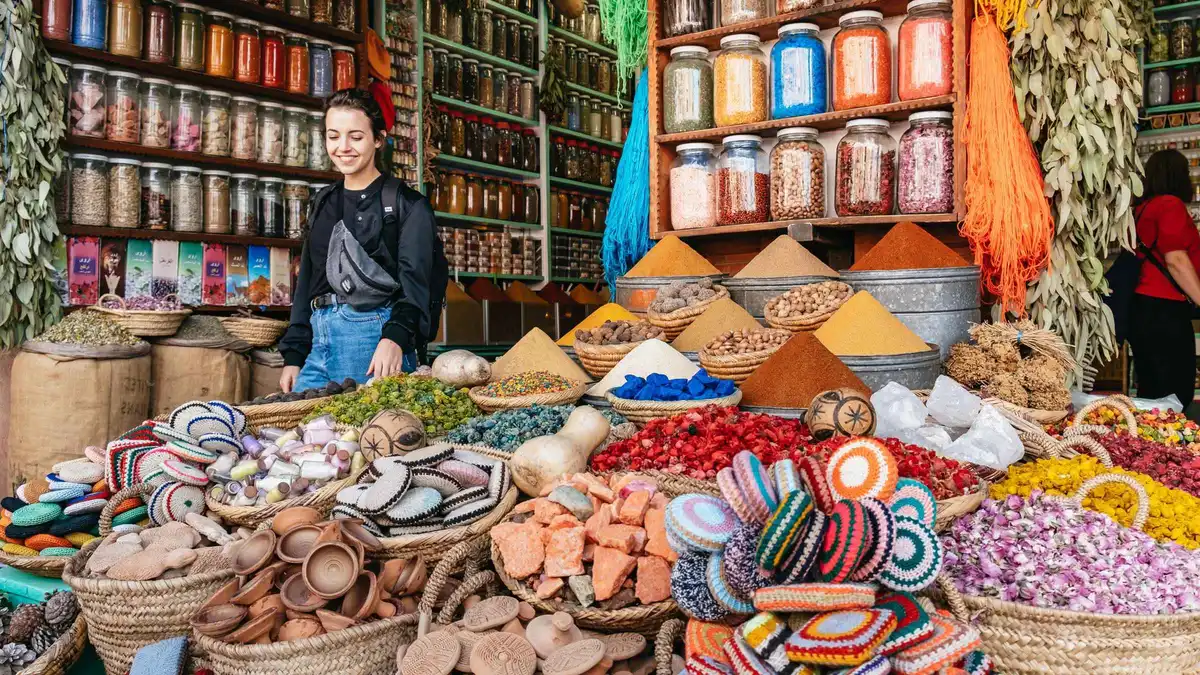
Three-hour guided walk through the dyers', metalworkers' and spice souks with a local guide. Sold as a shared small group or a private walk, pickup optional.
Check Availability from $27.64
Marrakesh: Guided Souk Shopping Tour with a Local Guide
listed at $27.64
Three-hour shopping walk with a local guide who translates and handles the haggling in the artisan souks. Runs in English or Italian, no pickup.
Check Availability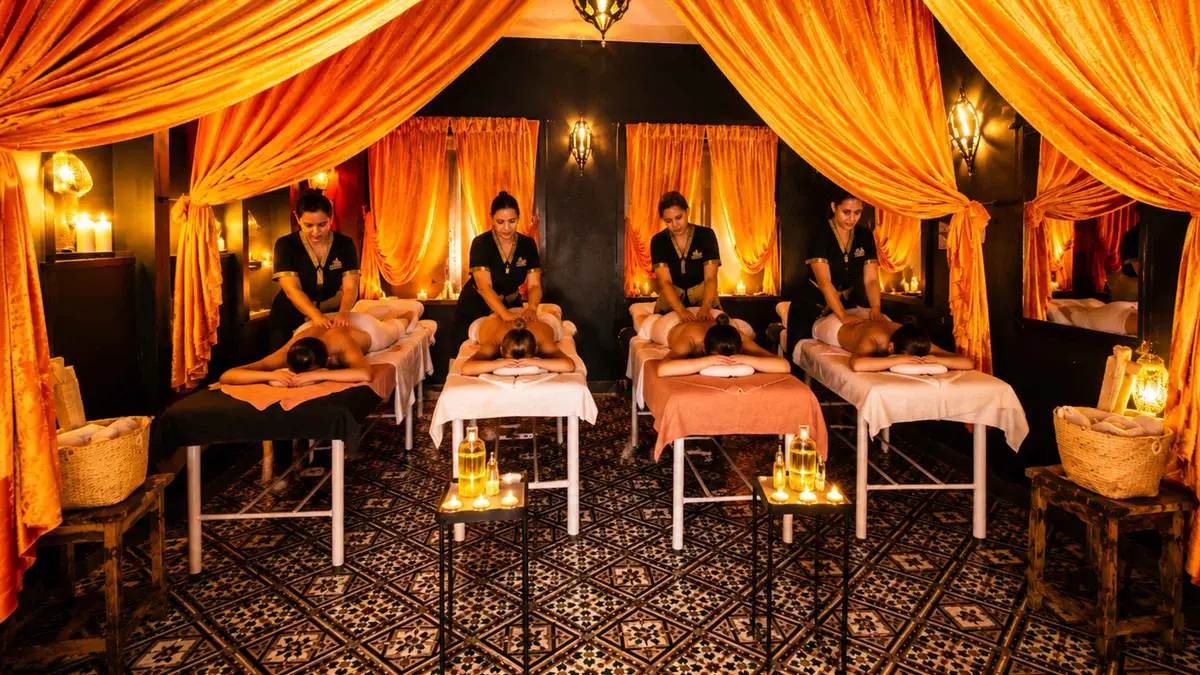 from $44.78
Marrakech: 2-Hour Traditional Moroccan Hammam Experience
listed at $44.78
Two-hour traditional hammam with black soap, kessa scrub and a massage at a city spa. No transfer included, so you make your own way there.
Check Availability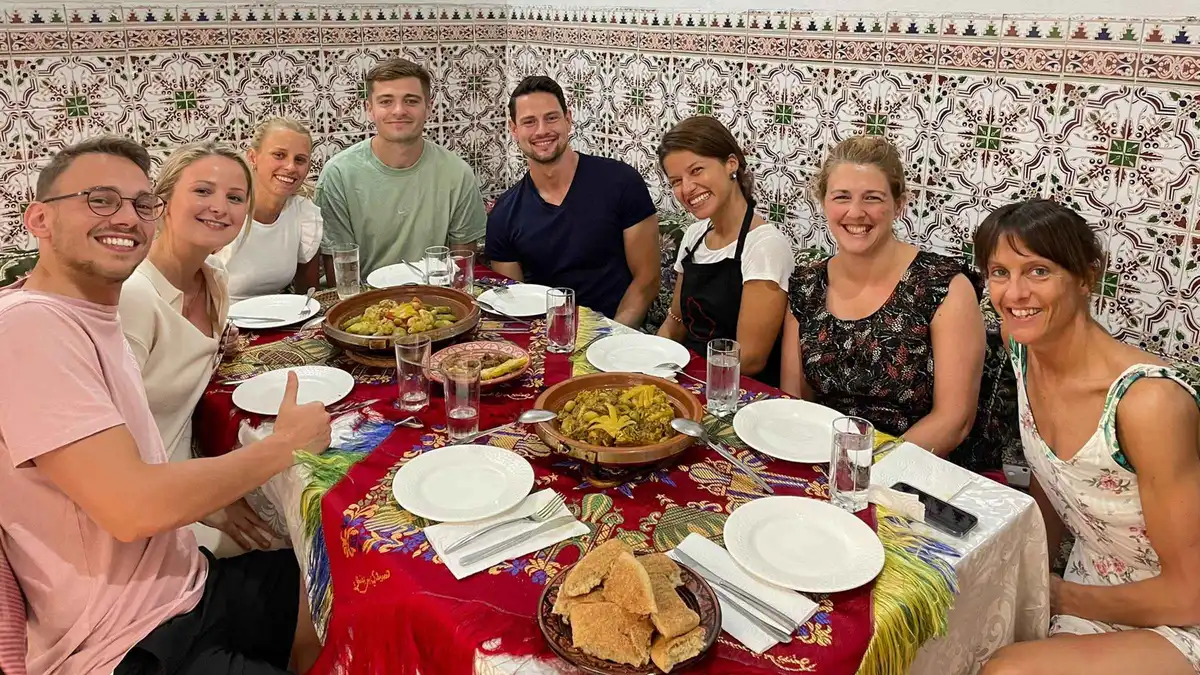 from $38.70
Marrakech Traditional Moroccan Cooking Class & Food Market
listed at $38.70
Two-and-a-half to three-hour cooking class starting with a market shop, then a tagine cooked and eaten at the workshop. Only people booked on the class can attend.
Check Availability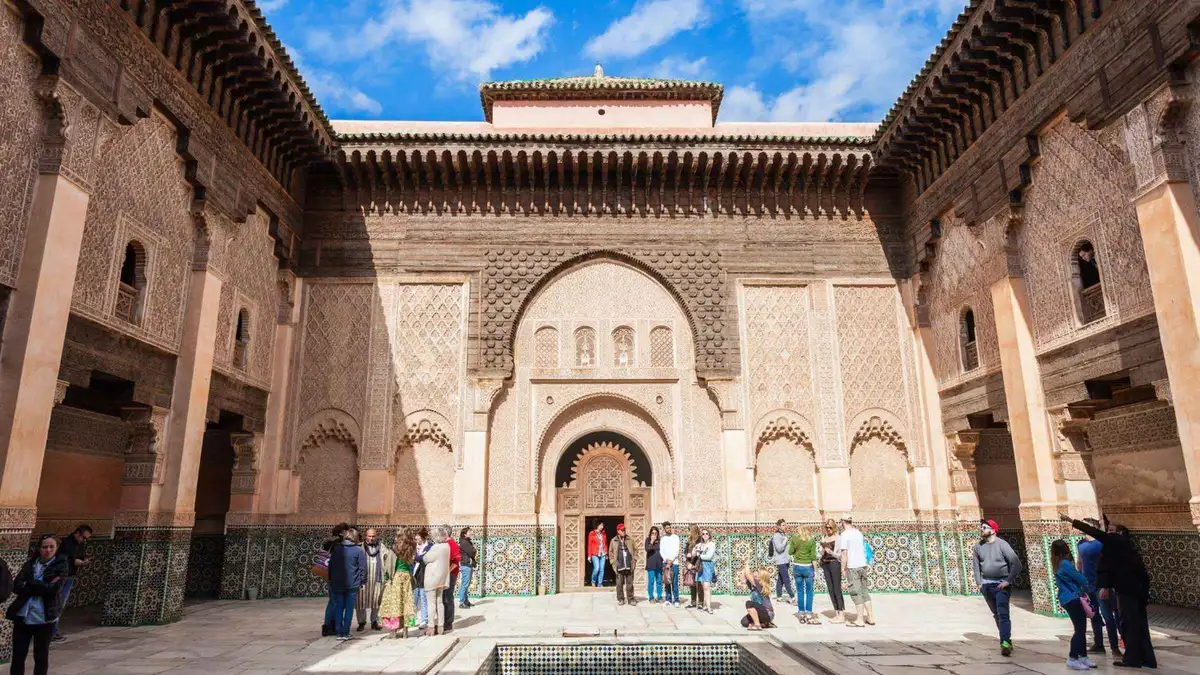 from $17.58
Marrakech: Madrassa Ben Youssef, Secret Garden & Medina Tour
listed at $17.58
Three-and-a-half to four-hour guided walk covering Madrasa Ben Youssef, Le Jardin Secret and the medina. Gate fees are separate and in cash: 50 MAD for the madrasa, 100 MAD for the garden.
Check Availability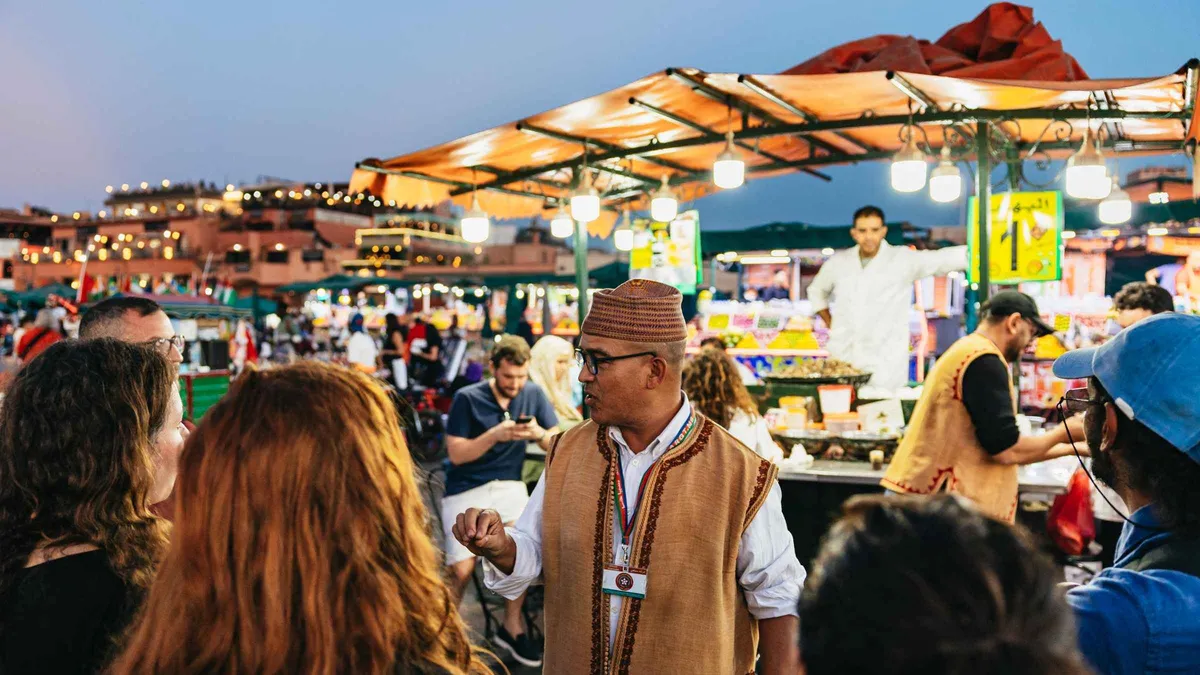 from $49.98
Marrakech: Street Food Tour by Night
listed at $49.98
Two-and-a-half-hour night walk through medina food stalls with tastings and drinks, hotel pickup and drop-off included. Sold as a shared group or a private tour.
Check Availability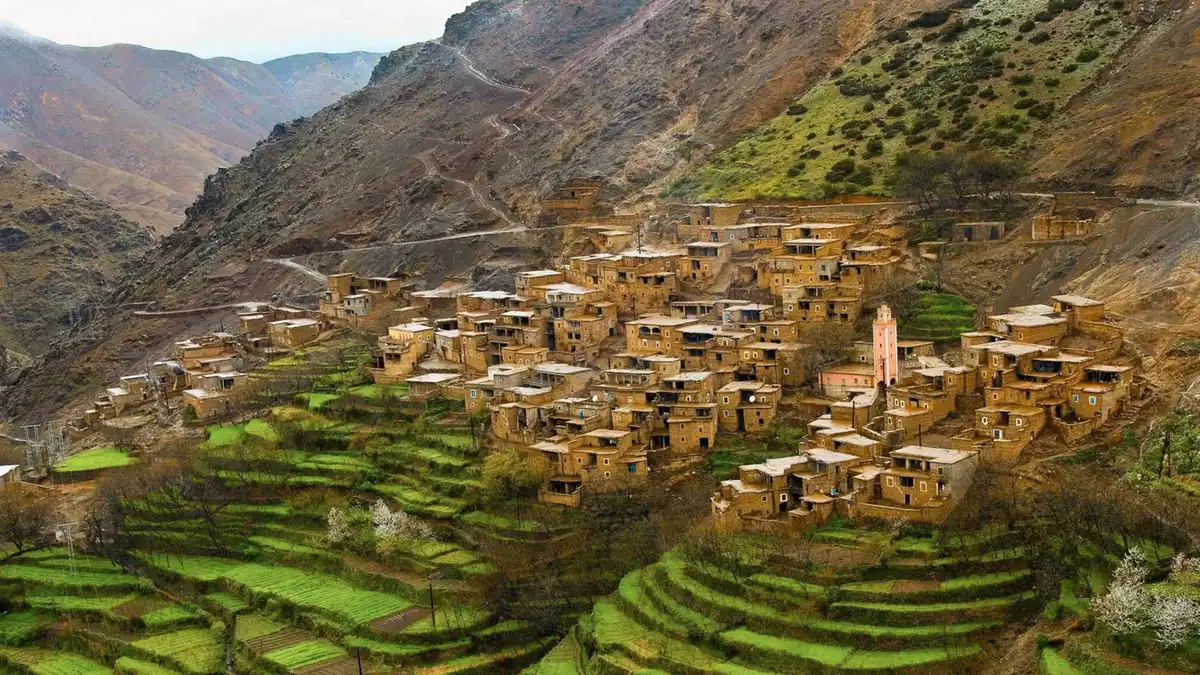 from $22.78
From Marrakech: Atlas Mountains Full-Day Hiking Trip with Lunch
listed at $22.78
Nine-hour Atlas day trip built around a two to three hour hike between Berber villages, with lunch. The operator says the walking can be lengthened or shortened on the day.
Check AvailabilityPrices, ratings and details are the platform's own, checked in Q3 2026; dollar figures are the listed prices — the platform bills in your account's currency.
What to Read Next
Four pages that answer the questions this one raises.
Best time to visit Marrakech
Thirty years of monthly means, rainfall and rain days, with what each month does to a walking day. When to visit is where the temperatures above come from.
The figures behind the packingSafety and scams
The clothing sentence quoted here sits inside a safety page, alongside the bag-snatching and guide warnings. Safety and scams quotes all of them in full.
The advisory in contextMarrakech hammams
House rules rather than published etiquette, and no municipal price for a neighbourhood bath. The hammams page sets the public version against the spa.
The undress questionThe souks and shopping
Babouches, kaftans and wool, priced by negotiation rather than by label. The souks explain how that conversation goes.
Where you will buy clothesWhat to Wear in Marrakech: The Questions
What do female tourists wear in Marrakech?
In practice, loose trousers or a long skirt with a light long-sleeved top, and a scarf in the bag. That is custom and comfort rather than a rule: no Moroccan authority publishes a dress code for visitors, and the only official guidance anywhere is the British recommendation to consider loose clothing covering the arms, legs and chest, given because women may receive unwanted attention. Female visitors in shorts and vest tops are a normal sight in both the medina and Gueliz, and the place-by-place table shows where custom actually tightens.
Can a woman wear shorts in Marrakech?
Yes, and nothing will happen. No Moroccan authority publishes a dress code for visitors, so nothing you wear is against a rule. The only official guidance in existence is the British recommendation to consider loose clothing covering the arms, legs and chest, given in the context of unwanted attention rather than propriety. In practice covered shoulders and knees attract less attention in the medina and are cooler under a 36.6°C sun, which is why most visitors converge on them.
Do I need to cover my hair in Marrakech?
No. A headscarf is not required anywhere a non-Muslim visitor is permitted to go, because working mosques are closed to you in any case. The one great mosque in Morocco that admits non-Muslims, the Hassan II in Casablanca, expects modest cover and shoes off on its guided visits at $14.91 (140 dhs) for a foreign adult. The mosque section sets out which Marrakech buildings you can and cannot enter.
What should men wear in Marrakech?
Long light trousers and a shirt, and no authority publishes anything more specific for men at all. Moroccan men in the city wear trousers overwhelmingly and shorts read as beach clothing rather than as an offence; long shorts pass without comment. The practical argument is the heat, since bare legs are hotter than loose cotton on a 36.6°C afternoon, and the men's section covers the hammam and pool situations too.
Is there a dress code at Marrakech monuments?
Not one that anybody publishes. The Ministry of Culture monuments, the Jardin Majorelle, the museums and the Ben Youssef Madrasa print prices and hours and no clothing condition; the only published conditions of that kind we found anywhere are Le Jardin Secret barring under-sixes from its tower and the Majorelle boutique barring pushchairs. The place-by-place table sets out where custom rather than rule applies.
What should I wear when it is 36°C?
Loose, pale and long. June to August average daily highs of 32.5°C to 36.6°C, and covered arms in linen or cotton are cooler in direct sun than bare skin. Closed shoes rather than sandals, because the lanes are uneven and wet in places, a hat, and a layer for evenings that still average 16.2°C to 19.4°C at night. The season table has the rest of the year, and when to visit has the full monthly record.
Do I need to dress differently during Ramadan in Marrakech?
A little more cover, and a change of behaviour that matters more than the clothing. The British advisory notes that clothing which does not meet local dress codes may cause more offence during the month, and that eating, drinking, smoking or chewing gum in public in daytime may cause offence. None of that is a law that reaches you: Penal Code article 222 is drafted for Muslims and does not apply to a non-Muslim visitor. What does change legally is alcohol, which cannot be bought or drunk publicly during the month.
Marrakech Clothing, Filmed on the Street
Three films that show what people are actually wearing in the lanes and on the terraces, which settles the question faster than any list. Their advice is traveller experience rather than an authority.
WHAT TO WEAR IN MARRAKECH: FULL PACKING GUIDE
A packing run-through in the season most visitors come, useful against the season table above.
Video: Traveling KangarooMOROCCO What to pack for Marrakech? Day & Night
The day-to-evening change that the city's temperature swing forces on you.
Video: TripilareWhat Can I Wear in Morocco? Moroccan Travel Tips
The custom question answered from the Moroccan side, next to the advisory wording quoted here.
Video: Wanderlust VoyagesVideos load from YouTube only when you press play.
Reviewed Q3 2026 (July–September 2026); next review Q4 2026. Prices, hours and terms are set by the venue or operator and confirmed at checkout.
We may earn a commission if you book through one of our links, at no extra cost to you. Full affiliate disclosure