 Marrakech Guidebook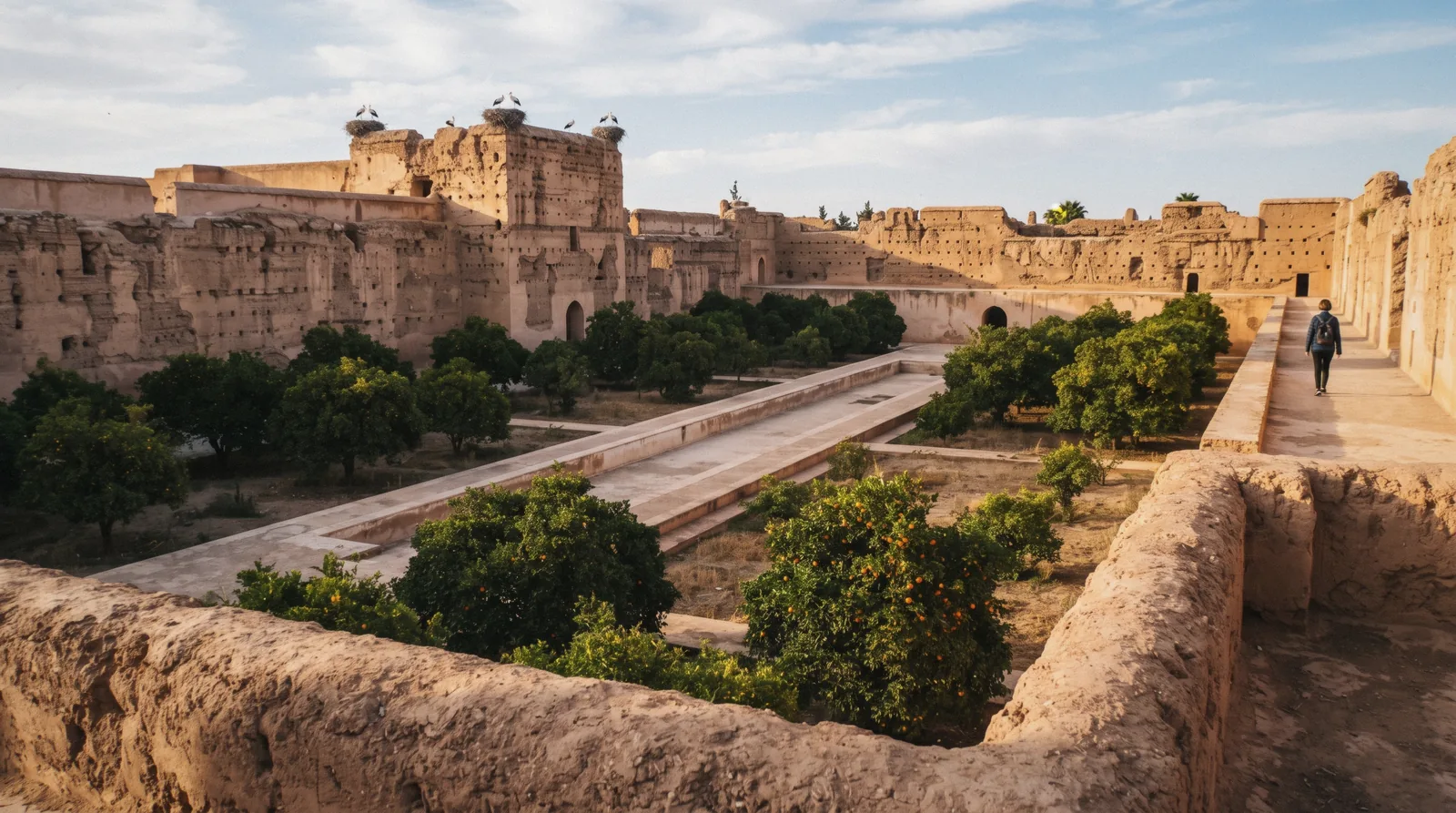
El Badi Palace
El Badi Palace is the stripped shell of the greatest Saadian building in Morocco: a rectangular courtyard 135 metres by 110 with an empty pool down the middle, four sunken orange orchards, rammed-earth walls with nothing left on them, and storks nesting along the parapet. It opens 09:00 to 17:00 and a foreign adult pays $10.65 (100 MAD) where a Moroccan or resident adult pays $3.20 (30 MAD). This page covers what survives, what was carried away, how long the ruin takes and which door you use; the ticket layer for the rest of the city sits on the Marrakech tickets hub, and the trip around it starts on this Marrakech guidebook.
Quick answer Hours, what a foreign adult pays, what is left to see, how long, in four lines
El Badi Palace opens 09:00 to 17:00 every day and a foreign adult pays 100 MAD, which is $10.65; a Moroccan or resident adult pays 30 MAD at the same window. The Ministry of Culture publishes no closing day, no last-entry time and no visit length for it.
Key takeaways
- There is no timed entry and no online-only stock, so the queue is a till queue: buy at the gate, or on the state platform if you would rather carry a voucher. The entry ticket sold as a product is the same admission with a postcard attached
- Allow 45 minutes for the courtyard, the pool and the ramparts, and about 75 if you go down into the pavilions and the excavated bathhouse. Our three routings say what each one skips
- It is a ruin, not an interior: the marble, the gold and the zellij were carried off to Meknes and the walls you walk are the rammed earth underneath. The furnished counterpart is the vizier's palace, eight minutes away on the same 100 MAD tariff
- The rooftop terrace over the ramparts is the reason to come late: it looks across the Kasbah to the Atlas, and the royal necropolis is a seven-minute walk from the same gate
Key facts
Opening hours
| Daily, as published by the Ministry | 09:00–17:00 |
|---|
Closed Not stated. The Ministry publishes no weekly closing day for the palace
Admission
- Adult
- $10.65 (100 MAD) foreign adult; $3.20 (30 MAD) Moroccan or resident adult
- Reduced
- $5.33 (50 MAD) foreign child 7 to 13; $1.07 (10 MAD) Moroccan or resident child 7 to 13
- Free
- Persons with reduced mobility; Moroccan nationals every Friday and on the first day of national and religious holidays
Planning it
- Time needed
- Not stated by the Ministry; our routing: 45 minutes for the courtyard and ramparts, 75 minutes if you go down into the pavilions and the bathhouse
- Book ahead
- Optional — walk-up usually fine
- Address
- Ksibat Nhass, Kasbah quarter, Medina, Marrakech
Four ways in, priced from the Ministry of Culture's own ticket page for the Palais Badii and from the GetYourGuide cards that list this monument. The state sells admission and nothing else; the cards add a licensed guide and, in two cases, the neighbouring monuments on the same walk. Card prices move with the date, so a listed figure is what you pay only once the checkout shows it.
Do you want the cheapest admission, or somebody who can tell you what used to stand where you are standing?
| Option | Price | Includes | Cancel | Book |
|---|---|---|---|---|
| Ministry of Culture ticket, online or at the gateThe default, and the only row that is not a resale. Carry dirhams: the window is a cash window | $10.65 (100 MAD) foreign adult; $5.33 (50 MAD) foreign child 7 to 13; $3.20 (30 MAD) Moroccan or resident adult; $1.07 (10 MAD) Moroccan or resident child | Admission only. No guide, no audio, no timed slot, minimum one ticket per order | Not stated | Official site |
| Entry ticket sold as a product, with a souvenir postcardAnyone who would rather hold a voucher than find a cash window, and does not mind paying above the gate fare for it | Listed at $17.44 | The same admission, no fixed entry time, plus a postcard posted to your address | Free up to 24 hours before | Check Availability |
| Three-hour private walk across the Kasbah monuments and the medinaTwo or three people who want the ruin explained and are happy to add 100 MAD a head at each door | Listed at $20.92 | A licensed guide and water; every monument ticket paid in cash at its own gate | Free up to 24 hours before | Check Availability |
| Tailor-made private guide, half day or full dayAnyone who wants this ruin read properly rather than passed through in fifteen minutes on a group circuit | Listed at $66.35 | A private licensed guide and pickup; up to two sights on the half day, four on the full day; entries not included | Free up to 24 hours before | Check Availability |
One gate, one tariff, four ways of reaching it. No guided card includes the 100 MAD admission, and the ticket product above is the same state ticket with a postcard attached. Entrance fees are the Ministry's published grid; card prices are what GetYourGuide listed when we read them. Official ticket-office links on this site are never affiliate links.
Guided walks that go into the ruin
Every card links to the operator's own page, where the calendar shows what is still open on your date. Prices are the figures the platform listed when we read the cards; ratings and review counts are the operator's own.
 from $17.44
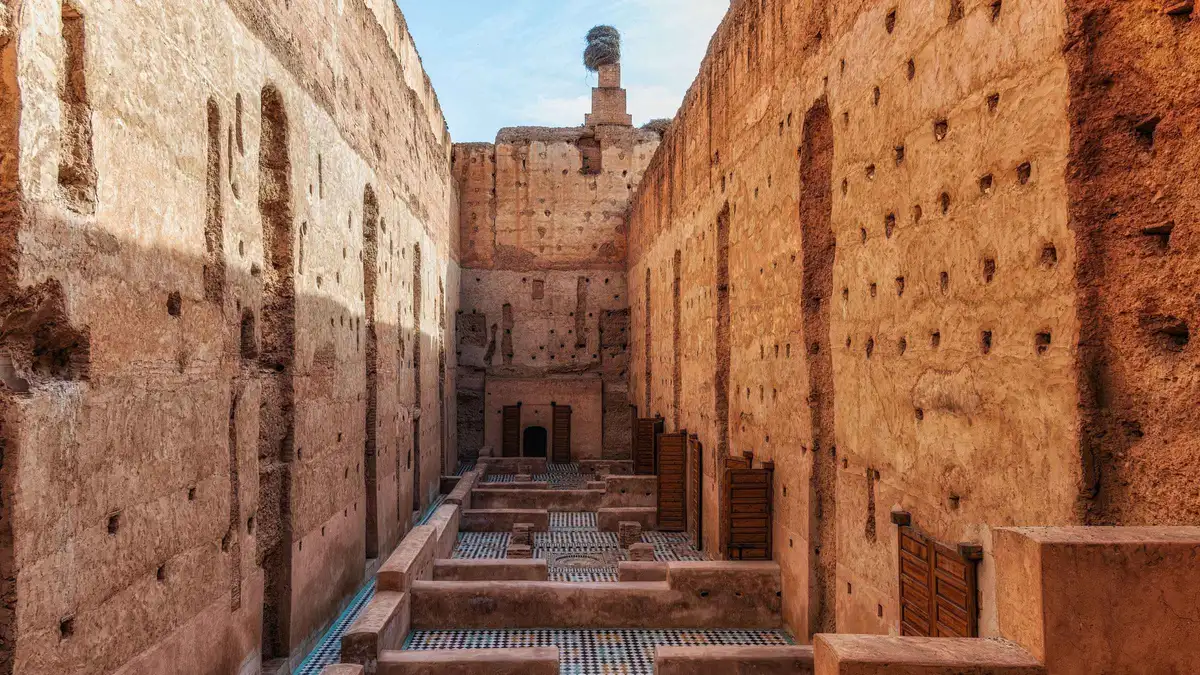
Marrakech: El Badi Palace Entry Ticket & Souvenir Postcard
listed at $17.44
Entry ticket to El Badi Palace with a souvenir postcard; the voucher is the ticket and there is no fixed entry time. The palace opens 09:00-17:00 with last entry at 16:30.
Check Availability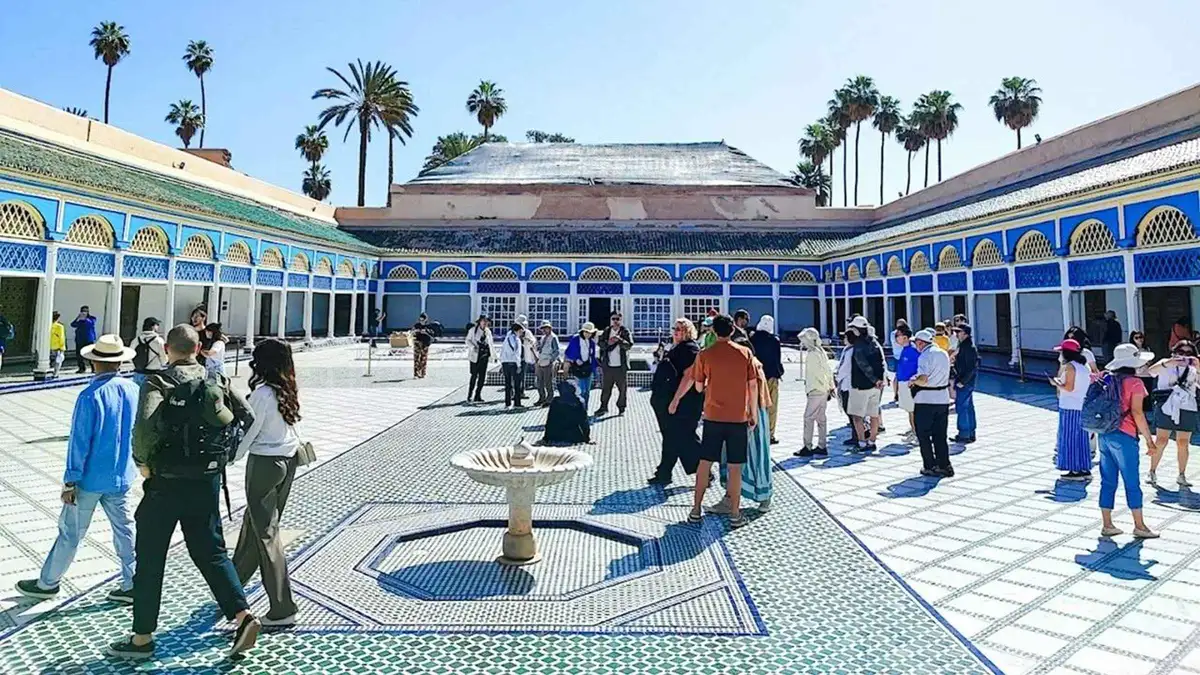 from $20.92
Marrakech: Bahia Palace, Saadian Tombs & Medina Walking Tour
listed at $20.92
Three-hour private walking tour of Bahia Palace, the Saadian Tombs and the medina with a local guide and water. Monument tickets are not included and are paid in cash at each gate.
Check Availability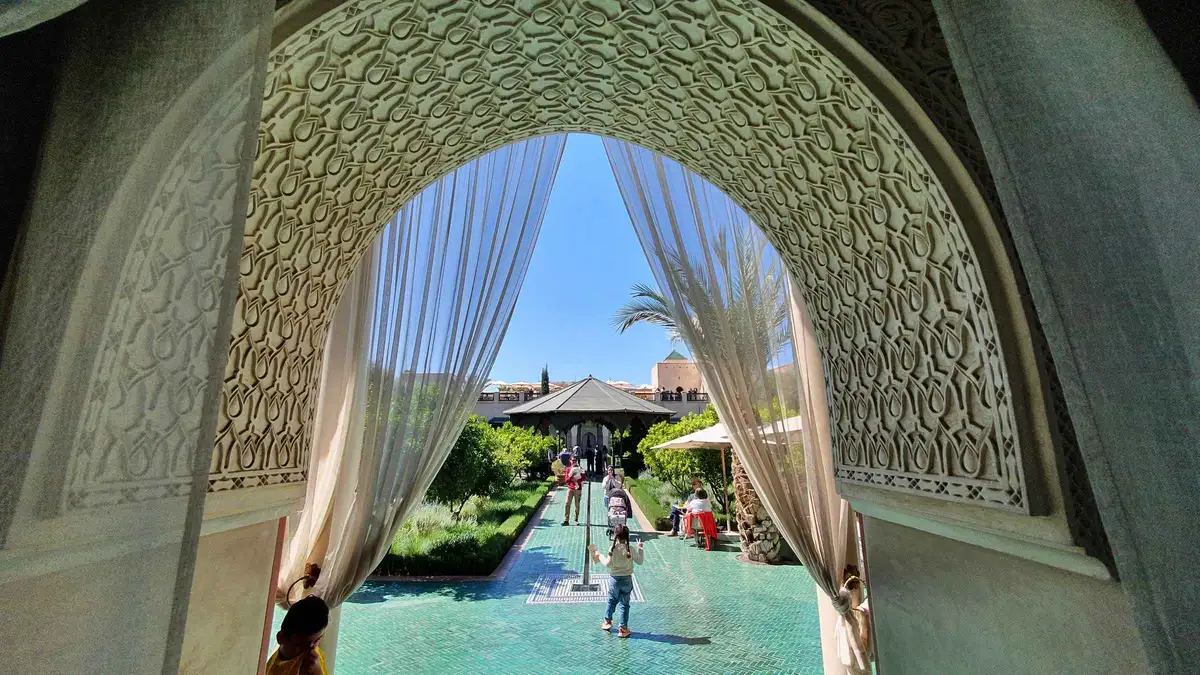 from $66.35
Marrakech: Tailor-Made City Tour With Your Own Private Guide
listed at $66.35
Half or full-day private tour built around what you ask to see, with pickup included. Up to two sights on the half-day and four on the full day; entrance fees are not included.
Check Availability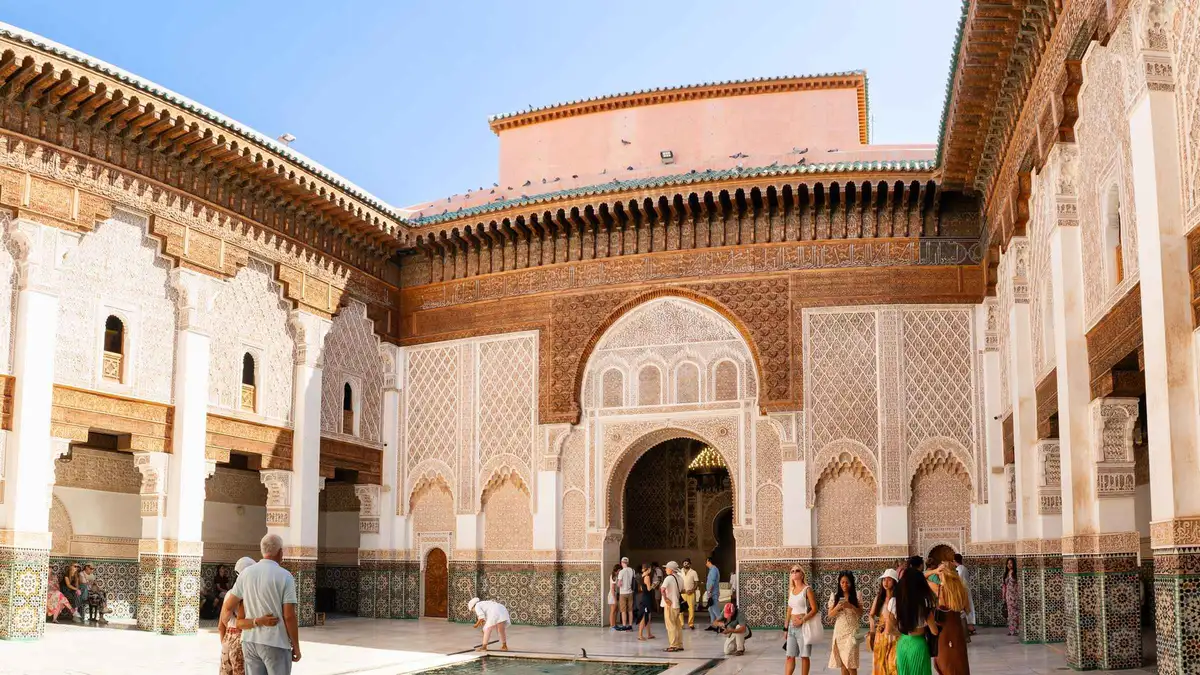 from $17.47
Marrakech: Historical Monuments, Souks & Medina Guided Tour
listed at $17.47
Four-hour licensed-guide circuit of the medina monuments, souks and lanes, with a WhatsApp briefing the day before. Private option includes riad pickup; monument tickets are separate.
Check Availability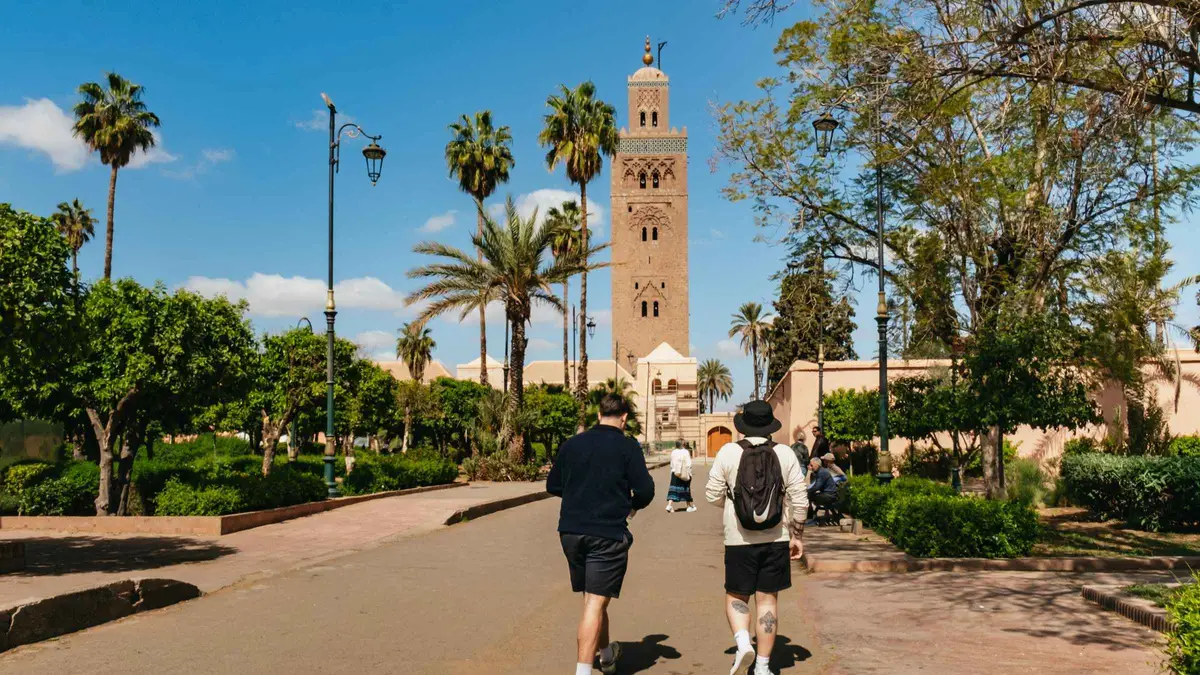 from $16.85
Marrakech: Saadian Tombs & Bahia Palace, Medina Guided Tour
listed at $16.85
Four-hour guided walk linking the Saadian Tombs, Bahia Palace and the medina lanes, with pickup available. Runs in several languages and is sold as shared or private.
Check Availability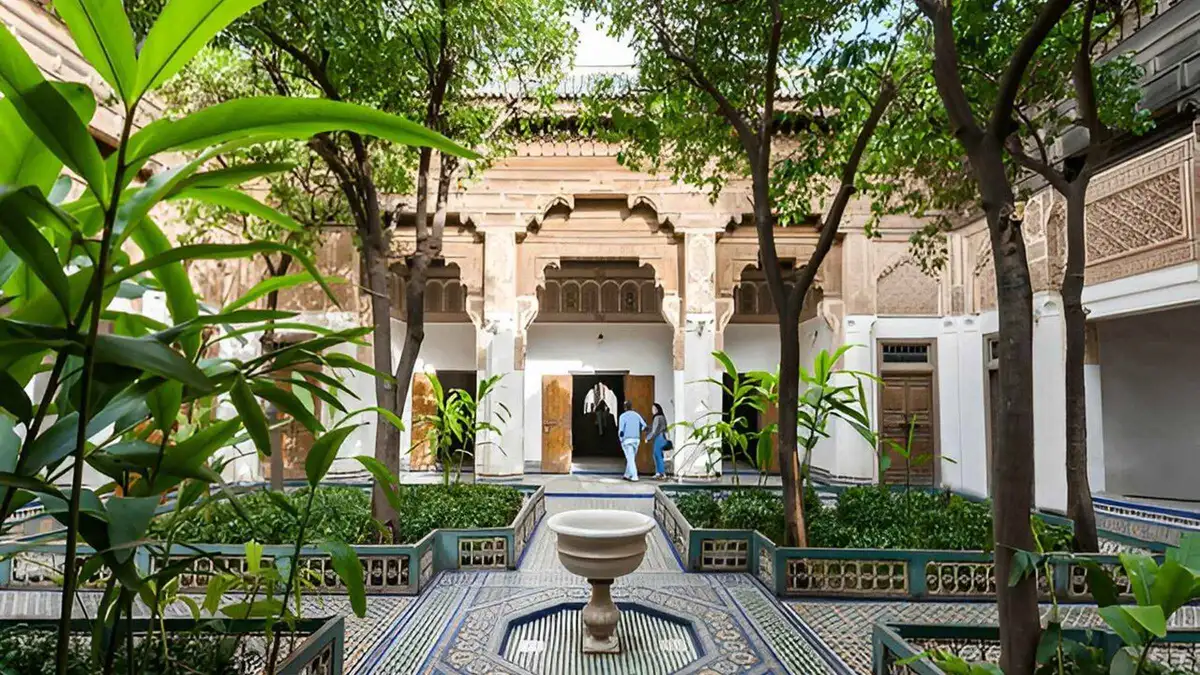 from $17.44
Marrakech: Bahia Palace, Saadian Tombs, & Koutoubia Mosque
listed at $17.44
Three-hour guided walk taking in Bahia Palace, the Saadian Tombs and the Koutoubia from the outside. Monument entrance fees are paid separately in cash: 100 MAD each for Bahia Palace and the Saadian Tombs.
Check AvailabilityPrices, ratings and details are the platform's own, checked in Q3 2026; dollar figures are the listed prices — the platform bills in your account's currency.
What El Badi Palace Is: A Reception Hall Built To Be Seen Once
This was never a house. It was the room in which a sultan received ambassadors, built to make the visit unforgettable in the fifteen minutes an envoy spent crossing it, and every material in it was chosen to say where Morocco's money came from.
Sultan Ahmad al-Mansur commissioned the palace a few months after his accession in 1578, and the chronicler al-Ifrani puts the start of construction in December of that year, with fifteen years of work to 1593. The historian Gaston Deverdun read the evidence differently: a Portuguese plan of the kasbah drawn in 1585 already shows a finished palace, while records of al-Mansur buying marble run to 1602, the year before he died. The likeliest reading is that the shell went up fast in the early 1580s and the decoration never stopped.
The money had two sources and both are visible in the fabric. The Portuguese ransom paid after the Battle of the Three Kings in 1578 funded the start; the Saadian control of the sugar trade paid for the rest, and the Italian marble columns were bought by exchanging sugar for its equivalent weight in stone. Lime and plaster came up from Timbuktu.
Workers were brought in from across Morocco and from Europe in numbers large enough that a market grew up beside the building site to feed them.
The name is one of the ninety-nine names of God in Islam, usually translated as "the Incomparable", and it had a precedent: a pavilion in the caliph's palace at Cordoba carried it first. That is the whole ambition of the building in one word, and it is worth carrying into the courtyard, because what is left has to be read as the negative of what stood there.
What the Ministry says, and what it does not
The state's own listing is thin. Its ticket page for the monument gives the tariff, the 9h to 17h hours and the free-entry rule, and publishes no plan, no room list, no visit length, no closing day and no accessibility statement. That silence is not an oversight on our part: we read the Ministry's own page for the Palais Badii in Q3 2026 and there is nothing more on it to quote.
Construction dates, the al-Ifrani and Deverdun readings, the ransom and sugar funding, the Italian marble exchange and the name are as recorded on the English Wikipedia article for El Badi Palace; hours, tariff and the absence of a plan are the Ministry of Culture's own ticket page for the Palais Badii, read in Q3 2026.
The Official Page Describes The Wrong Palace
The single most confusing thing about this monument is that its own government page tells you about a different one. This is checkable in thirty seconds and it explains a great deal of the muddle in circulation.
Open the state ticket page for the Palais Badii and the description under the tariff begins by saying the palace was founded in 1886 by Abi Imrane Moussa Ben Ahmed Ben Mbarek, grand vizier, and enlarged afterwards by his son Ba-Hmad. That is not this building. Those are the two viziers who built the Bahia, three hundred years later and a kilometre north-east.
The Ministry of Culture has printed the Bahia's history on El Badi's ticket page, and it was still there when we read both pages in Q3 2026.
The practical consequence is that a visitor who researches by copying the official text ends up expecting painted cedar ceilings and finds bare rammed earth. Told apart in one line: El Badi is Saadian, sixteenth century, ruined and roofless; the Bahia is Alaouite-era, nineteenth century, intact and full of ceilings. One was demolished on a sultan's orders, the other was emptied of its furniture on a sultan's orders, which is why both are bare and only one is a ruin.
They are also priced identically at $10.65 (100 MAD) a foreign adult, sit eight minutes apart on foot, and are sold from the same platform, so nothing in the ticketing helps you tell them apart either. Which of the two is worth your morning depends on whether you would rather see scale or craftsmanship, and that comparison is set out at length in our piece on choosing between the two palaces; the ceilings themselves are described on the Bahia page.
The mismatched description was read on the Ministry of Culture ticket pages for the Palais Badii and the Palais El Bahia in Q3 2026; the dynastic framing follows the English Wikipedia articles for both monuments.
El Badi In Eight Dates
The palace was built in fifteen years and taken apart over about fifty, and the ruin only makes sense in that order.
-
1578
The Battle of the Three Kings pays for it
Ahmad al-Mansur takes the throne after the Saadian victory over the Portuguese, and the ransom money funds a palace begun within months of his accession.
-
1578 to 1593
Fifteen years of building
Al-Ifrani gives the span; a Portuguese plan of the kasbah drawn in 1585 already shows the palace complete, so the later years are embellishment rather than construction.
-
1590s
Sugar for marble
Columns fabricated in Italy are paid for in sugar by weight, while lime and plaster arrive from Timbuktu. The decoration continues until al-Mansur's last marble order in 1602.
-
1603
Al-Mansur dies and maintenance stops
Saadian power declines with him and the palace is not kept up. At one point the site is recorded as malarial.
-
1668 to 1669
The last resident
The first Alaouite sultan, Moulay Rashid, lives here briefly. Within a decade his successor is refusing to let ambassadors see the place because of its condition.
-
1707 to 1708
Stripped for Meknes
Al-Ifrani records Moulay Isma'il ordering the palace demolished and its materials taken for his new capital. In practice the dismantling ran for decades either side of that order, and Saadian fragments turn up in buildings as far away as Algiers.
-
2018
Exhibition rooms open
New exhibition spaces open inside the ruin, joining the room that displays the twelfth-century minbar brought here from the Koutoubia mosque.
-
2023
Earthquake damage and a reopening
The September earthquake cracks walls in the exhibition rooms and around the modern toilets. The site closes for repair and reopens to visitors the following month.
Dates, the al-Ifrani and Deverdun readings, the Meknes dismantling, the 2018 exhibition rooms and the 2023 damage and reopening are as recorded on the English Wikipedia article for El Badi Palace (en.wikipedia.org/wiki/El_Badi_Palace); the hours and tariff throughout are the Ministry of Culture's.
What Is Actually Left, And Where To Stand
Nothing here is labelled and the route is open in every direction, so the risk is walking a big rectangle and leaving. Five things carry the visit.
The courtyard and the pool. The rectangle measures 135 metres by 110, with a central basin 90.4 metres long and 21.7 wide. It is usually empty of water, which is the honest state of it: the point is the scale, and the four sunken gardens planted with orange trees sitting several metres below your feet. Four further basins, each roughly 30 by 20 metres, lie along the east and west sides.
It is a riad garden built at the size of a parade ground.
The Pavilion of the Fifty. The great western pavilion, al-Qubbat al-Khamsiniya, was the throne hall, named either for its area in cubits or for the fifty columns it once carried. The alcove in the back wall marks where the sultan sat, under an inscription cut in black marble against white. Stand in the alcove and look back down the pool: that is the view the building was designed around, and it is the one photograph worth taking here.
The undercroft and the bathhouse. Behind the southern pavilion are the partially excavated hammams, and beneath the courtyard runs the vaulted hydraulic system that fed the pools. These are the parts most visitors miss because the stairs down are unmarked. They are also the coolest place on the site at midday.
The ramparts and the storks. A stair leads up to a terrace on the walls with a view over the Kasbah quarter to the Atlas on a clear day. Storks nest on the parapets and on the ruined tower stumps, and they are permanent residents rather than a seasonal show. The last hour before closing is when the walls turn the colour the postcards claim.
The minbar room. The twelfth-century minbar that once stood in the Koutoubia mosque is displayed here in its own space, along with exhibition rooms opened in 2018. It is the oldest and finest object in the palace and it did not belong to it: like the Almoravid dome in the northern medina, it is a survivor of a building that no longer exists. The Ministry publishes no exhibition list, so ask at the window whether the room is open before you plan a visit around it.
Courtyard and pool dimensions, the pavilion names and functions, the bathhouse remains and the minbar display are as recorded on the English Wikipedia article for El Badi Palace; the storks, the terrace view and the stair positions are our own reading of the site plan and of visitor footage, not an official statement.
How Much Time To Give El Badi Palace
The Ministry publishes no visit length for any monument it sells in this city, which is unhelpful when the ruin is one stop in a morning of three. These routings are ours, built from the site plan and from where the stairs are.
The variable here is vertical, not horizontal. Walking the courtyard takes ten minutes and tells you the scale; the time goes on the two levels most people never reach, the undercroft below and the rampart terrace above. Whichever routing you take, the ruin is the one monument in the Kasbah that is better in the last hour than the first, because the walls need low light and the crowd has gone to dinner.
| Routing | What you get | What it skips | Door to door |
|---|---|---|---|
| The quick loop | The courtyard, the pool, the sunken orange gardens and the throne alcove | The undercroft, the bathhouse and the rampart terrace | About 45 minutes including the ticket window |
| The full ruin | All of the above plus the excavated hammams, the water vaults and the walk along the ramparts | Nothing that is open on the day | About 75 minutes, more if the minbar room is open |
| With a guide | A private licensed guide puts the Saadian court and the Meknes dismantling on the walls you are looking at | Nothing: the admission is separate and stays yours after the group moves on | Two hours across this and the neighbouring monuments |
For comparison, the necropolis in the Kasbah rarely takes more than half an hour because the queue for the main chamber is the visit, and the vizier's palace runs 45 to 90 minutes. All three sit inside a fifteen-minute walk of each other, which is the shape the one-day plan uses, and three adult admissions at 100 MAD each come to $32.00 (300 MAD) before lunch.
Timings are ours. The Ministry states no visit length for this monument; the comparison figures come from the routings on our pages for the two neighbouring monuments.
Opening Hours, The Friday Rule And The Best Light
The hours below are the Ministry of Culture's own published figures for this monument, read on its ticket page for this guide. Everything the state does not publish is flagged as such, because most El Badi Palace opening hours circulating online are a guess repeated.
The published statement is 9h to 17h, and that is all of it: no seasonal variation, no ticket-window closing time, no stated last entry and no weekly closing day. One operator listing for the monument states last entry at 16:30, which is plausible and is not a state figure, so treat it as the operator's claim and arrive before 16:00 rather than testing it.
| What you want to know | What the Ministry publishes | What that means on the day |
|---|---|---|
| Daily hours | 9h to 17h | Be at the window by 16:00; an operator card says last entry 16:30, the state says nothing |
| Closing day | Not stated | Plan on it being open every day, and verify at the gate before you build an afternoon on it |
| Ramadan hours | Not stated for this monument | Two Marrakech venues do publish shortened Ramadan hours, so assume a shorter day here too |
| Timed entry | No slot system exists | Your ticket is for the day, not for an hour, so there is no slot to miss |
| Visit length | Not stated | 45 to 75 minutes on our routings above |
Friday is the busiest day, and it is a tariff question
The Ministry grants free entry to Moroccan nationals every Friday and on the first day of national and religious holidays. A visitor pays the full 100 MAD on those days like any other, so a Friday afternoon costs you the same and buys you the fullest courtyard of the week. In a ruin this size that matters less than it does inside a palace, which is a real argument for putting El Badi rather than an interior into a Friday. The Friday and holiday openings page lists which monuments the rule covers.
The best hour, and the worst
Between 11:00 and 14:00 the courtyard is a treeless rectangle in full sun with no shade except the pavilion shells, and in summer that is a genuine problem rather than an inconvenience: the climate page has the July and August figures. The two good windows are the first hour after opening and the last hour before closing, and of the two the late slot wins, because the low sun on rammed earth is the whole reason photographs of this place look the way they do.
Hours, the absence of a closing day and the Friday rule are from the Ministry of Culture ticket page for the Palais Badii, read in Q3 2026; the 16:30 last entry is a GetYourGuide operator listing, not a state figure; the light and shade notes are ours.
Five Things Most Visitors Do Not Know About El Badi Palace
Each one comes off the state's own page or the documented record, and each changes something practical about the visit.
- The official ticket page describes the Bahia. The Ministry's own listing for the Palais Badii opens with a palace founded in 1886 by a grand vizier and enlarged by his son Ba-Hmad, which is the Bahia's history printed on the wrong monument [Ministry of Culture ticket page for the Palais Badii, read in Q3 2026]. - The walls were never meant to be seen. The rammed earth you photograph was the structural core, hidden under marble, zellij, carved stucco and gilding; the excavated zellij fragments include geometric patterns with twenty-pointed stars, more complex than anything Moroccan craftsmen had cut before [en.wikipedia.org/wiki/El_Badi_Palace]. - The best object in it is a refugee. The twelfth-century minbar displayed here was made for the Koutoubia mosque, not for this palace, and it is four centuries older than the building that now houses it [en.wikipedia.org/wiki/El_Badi_Palace]. - A Moroccan pays 30 MAD where you pay 100. The two-tier tariff is printed on the state platform along with free entry for Moroccan nationals every Friday, and almost no English-language page states it [Ministry of Culture ticket page for the Palais Badii]. - The ruin was an owl sanctuary and a grazing field. After the dismantling the enclosure was used for animals before it was a monument, which is why so little survives at ground level and why the excavated gardens sit metres below the modern surface [en.wikipedia.org/wiki/El_Badi_Palace].
At El Badi: What To Do, And What Not To
Every line is a decision argued above, compressed into the form you can act on at the gate.
Do
- Come in the last hour if you can choose, because the walls need low light and the terrace view is the best thing here
- Find the stairs: the undercroft below the courtyard and the rampart terrace above it are what separate 45 minutes from 75
- Carry dirhams and have $10.65 (100 MAD) per foreign adult ready, because the window is cash
- Stand in the throne alcove of the western pavilion and look back down the pool, which is the axis the palace was built on
- Ask at the window whether the minbar room and the exhibition spaces are open, since the state publishes no exhibition list
Don't
- Don't arrive expecting decoration. Everything that was worth carrying was carried to Meknes, and the bare earth is the history
- Don't cross the courtyard at midday in summer: there is no shade in the middle and no water on sale inside the enclosure
- Don't pay for a skip-the-line upgrade. There is no timed entry to skip here, only a till
- Don't trust a closing day you read elsewhere, because the Ministry publishes none for this monument
- Don't treat the storks as a set piece. They nest on the parapets year round and are best seen from the terrace, not the courtyard floor
Getting There, And Which Door You Want
The palace sits inside the Kasbah quarter behind Place des Ferblantiers, and the entrance is not where the walls suggest it should be.
On foot from Jemaa el-Fna the walk is about twenty minutes: south-east out of the square down Riad Zitoun el-Jdid, past the Bahia, into Place des Ferblantiers, then through the arch of Bab Berrima and left along the palace wall. From the square itself it is one of the easier medina routes to hold in your head. From the Bahia it is eight minutes through the Mellah, and from the Saadian Tombs about seven.
By petit taxi, ask for Place des Ferblantiers and walk the last three minutes, because no vehicle reaches the gate. The meter is compulsory under a 1963 dahir restated by Interior Ministry circulars, and no Marrakech authority publishes the per-kilometre rates, so the running meter is your protection rather than a price list. Getting around sets out what is published and what is not.
The door. One visitor entrance, reached through Bab Berrima and along the outside of the enclosure wall, with the ticket window beside it. There is no group lane and no reserved-ticket lane, because there are no reserved tickets: a state e-ticket and a paper ticket join the same line. The queue here is minutes at worst, unlike the bottleneck at the tomb chamber up the road.
El Badi Palace Map: The Gate And What Is Within Ten Minutes
The palace entrance at the Ministry's own published coordinates, with the four sights inside a ten-minute walk. Walk times are our estimates from the straight-line distances, rounded up for medina lanes.
Palace coordinates as published on the Ministry of Culture ticket page for the Palais Badii; the other four from Wikidata, verified for this guide.
Next Stop From El Badi
Walk minutes are our estimates from the GPS distances, rounded up for the lanes.
Saadian Tombs
The same dynasty, the same century and the same 100 MAD tariff, but intact: the marble that was stripped from this courtyard is what the tomb chambers still have. Doing the necropolis straight after the ruin is the only way to see what El Badi looked like with its surfaces on.
7 min walkBahia Palace
The furnished counterpart, three centuries later and still roofed. Eight minutes through the Mellah on the same tariff, and the pairing is why the vizier's palace and this ruin appear on the same guided cards.
8 min walkThe Mellah
The historic Jewish quarter runs between this gate and the Bahia's, and it costs nothing to walk. No authority publishes its boundary or its synagogue hours, so the Mellah is a walk rather than a ticket.
4 min walkEl Badi Palace Questions
How much does El Badi Palace cost to enter?
A foreign adult pays $10.65 (100 MAD) and a foreign child of 7 to 13 pays $5.33 (50 MAD). A Moroccan or resident adult pays $3.20 (30 MAD) and a Moroccan or resident child $1.07 (10 MAD). Free entry is narrow: persons with reduced mobility, and Moroccan nationals every Friday and on the first day of national and religious holidays. A foreign passport pays full price on those days too. The tickets hub sets the fare against the rest of the city.
Is El Badi Palace worth visiting?
Yes, if you go for scale and for what a ruin can tell you. There is no decoration left, so the visit is a courtyard 135 metres long, sunken orange gardens, the excavated bathhouse and a rampart terrace over the Kasbah. If you want carved and painted interiors instead, spend the same 100 MAD eight minutes away at the vizier's palace. If you want the ruin explained rather than crossed in silence, a private guided walk is the cheapest way to get a licensed guide onto it.
What are El Badi Palace opening hours, and is there a closing day?
The Ministry publishes 9h to 17h and nothing else: no seasonal change, no last entry, no weekly closing day. An operator card states last entry at 16:30, which is not a state figure. That silence is real rather than an omission on our part, which is why we suggest being at the window by 16:00. No Ramadan hours are published for this monument either, though two other Marrakech venues publish shortened ones, so expect a shorter day.
How long do you need at El Badi Palace?
The Ministry states no visit length. Our routings are 45 minutes for the courtyard, pool and throne alcove, about 75 minutes if you take the stairs down into the undercroft and up onto the ramparts, and roughly two hours if you visit with a guide who also walks the neighbouring monuments. What each routing skips is in the timing table above.
Why is El Badi Palace a ruin?
It was dismantled on purpose. After the Saadian dynasty declined the palace was left unmaintained, and the chronicler al-Ifrani records Moulay Isma'il ordering it stripped in 1707 to 1708 so that its marble, doors and decoration could be reused in his new capital at Meknes. The stripping ran over decades rather than in one campaign, and Saadian fragments turn up in buildings across Morocco and in Algiers. What survives is the rammed-earth core that was never meant to be seen.
Are there storks at El Badi Palace?
Yes, and they are residents rather than a seasonal event. Storks nest on the parapets and on the stumps of the ruined towers, and the rampart terrace is where you see them at eye level rather than as specks from the courtyard floor. Nobody official publishes a count or a nesting calendar, so treat it as a reliable sight rather than a guaranteed one, and bring the longest lens you have.
Can you see the Koutoubia minbar at El Badi Palace?
It is displayed here in its own room, alongside exhibition spaces that opened in 2018. The minbar is a twelfth-century piece made for the Koutoubia mosque, so it is four hundred years older than the palace that houses it. The Ministry publishes no exhibition list and no room-by-room opening statement, so if the minbar is the reason for your visit, ask at the ticket window before you pay.
El Badi On Film: The Courtyard, The Undercroft And The Terrace
Three walk-throughs that show the scale a photograph flattens, including the stairs most visitors never find.
El Badi Palace, Marrakech, Morocco (4K)
An unedited crossing of the courtyard and the pool, which is the fastest way to judge whether 45 minutes is your routing.
Video: Morocc_OH!Majestic Ruins: Exploring the Wonders of El Badi Palace, Marrakech
Covers the pavilion shells and the rampart terrace, the two things a courtyard-only visit misses.
Video: iTraveLXEl Badi Palace, Marrakesh
A short, plain pass across the enclosure that shows how little shade there is between the walls at midday.
Video: Location MarrakechVideos load from YouTube only when you press play.
Reviewed Q3 2026 (July–September 2026); next review Q4 2026. Prices, hours and terms are set by the venue or operator and confirmed at checkout.
We may earn a commission if you book through one of our links, at no extra cost to you. Full affiliate disclosure